Getting local government reform right
LOCAL government reform rarely sounds like the most exciting subject. But the proposals published by the Scottish Government last week could change where some of the decisions affecting our communities are made, so we need to engage seriously with them.
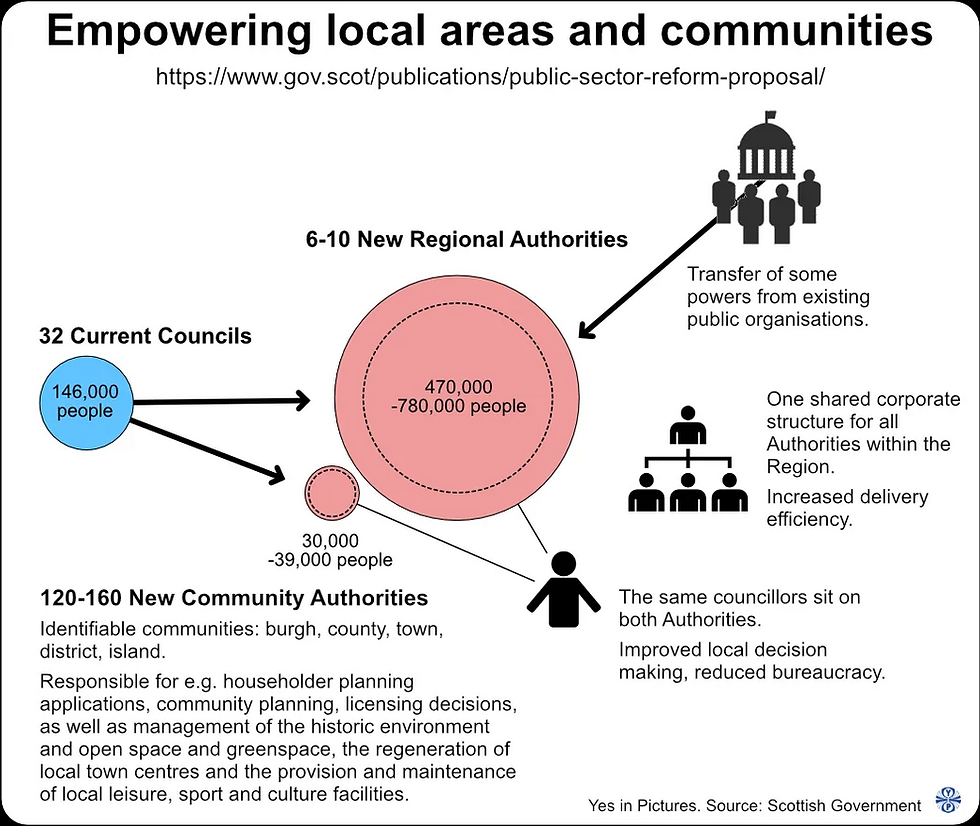
The starting proposal is to replace Scotland's 32 councils with between six and ten larger regional authorities, alongside 120 to 160 community authorities covering recognisable towns and areas.
Some services need enough scale to be run efficiently and consistently, while other decisions are better taken locally, by the communities they affect most.
The government's argument is that we should get that balance better, with services that work well, are sustainable and make the best use of public money.
Much of the attention has been on what a larger regional authority might mean for the Borders. The part that interests me most is what could be brought closer to communities like ours.
We do not know what the eventual map would look like, but imagine a community authority based around Tweeddale.
Decisions on town centre regeneration, parks and green spaces, local leisure, sport and cultural facilities, licensing and some local planning could sit at that level, with a wider question about what other powers could be devolved.
There is some history here too. Peebles and Innerleithen had their own town councils until 1975, and Tweeddale then had its own district council until 1996.
Those were different structures in a different era, but decisions affecting this area have not always been taken at Borders-wide level.
Most people judge local government by whether their services work, whether they can influence decisions affecting their area, how accessible those services are and what they cost.
If we are going to reorganise, bringing meaningful decisions closer to communities should be one of the tests.
That means real responsibilities and the resources to match. The government's paper also raises the question of what revenue-raising powers might sit locally and regionally.
There are still big questions about where the boundaries should be, which services benefit from being organised across a larger region and which should sit nearer home, and how rural areas keep a strong voice.
These are initial proposals, not a finished scheme, so this is exactly the point at which the Borders should engage fully.
If we want particular powers kept close to communities, particular boundaries, or safeguards for rural areas, now is the time to make that case.
For Tweeddale, I want us asking what decisions we would like made closer to home, what powers would make a real difference locally, and what an empowered community authority could look like.
If change is coming, we should be helping shape it.